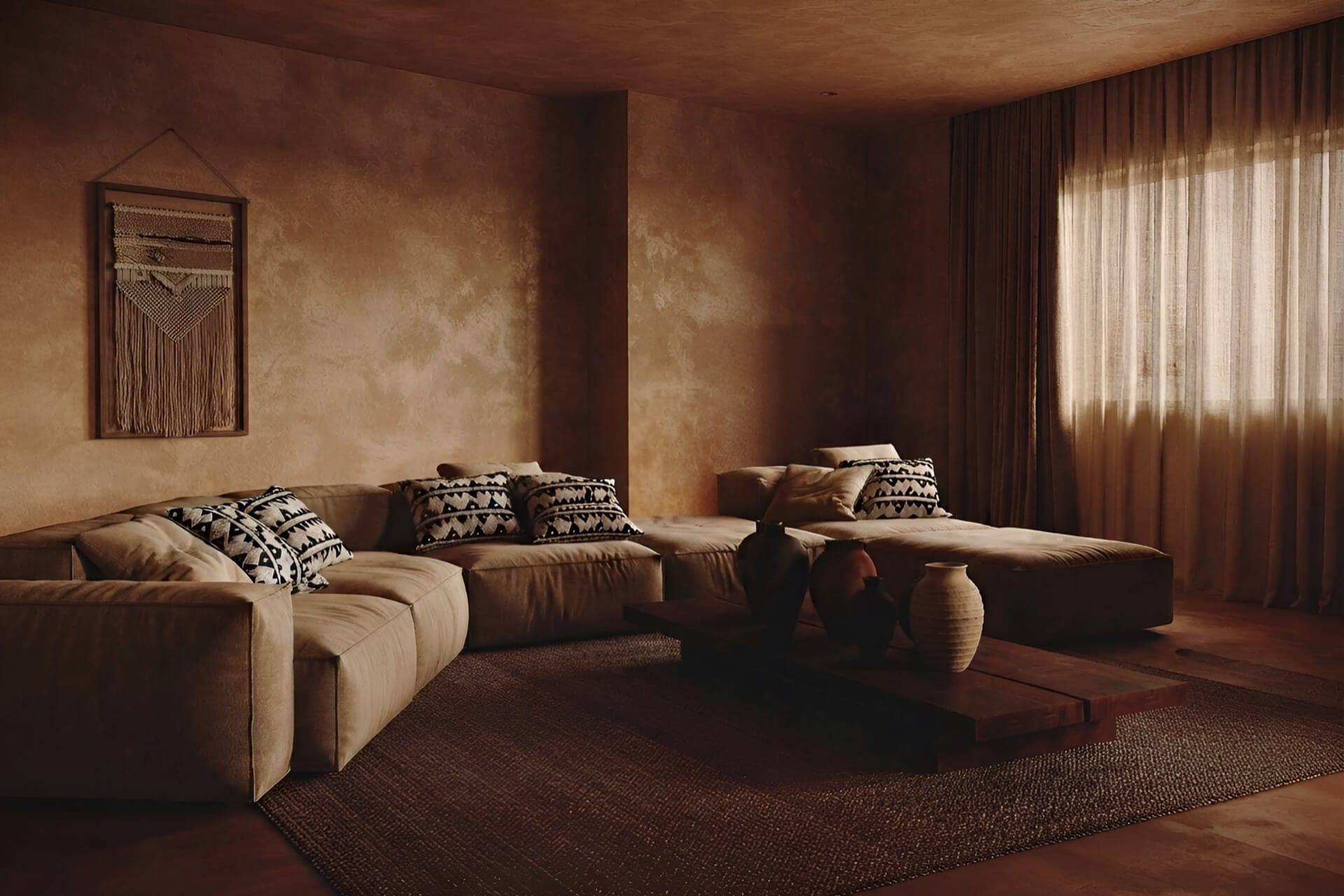

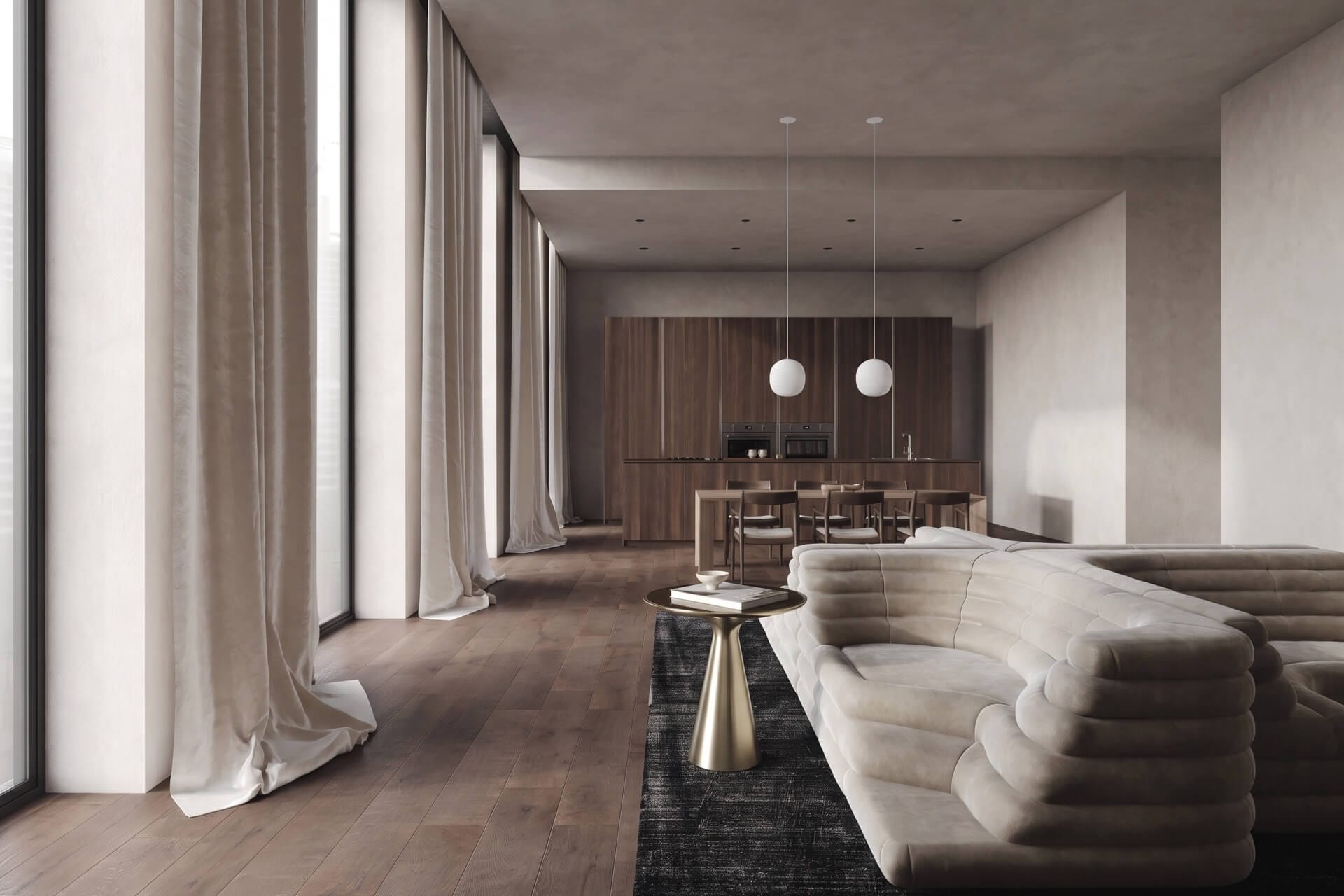
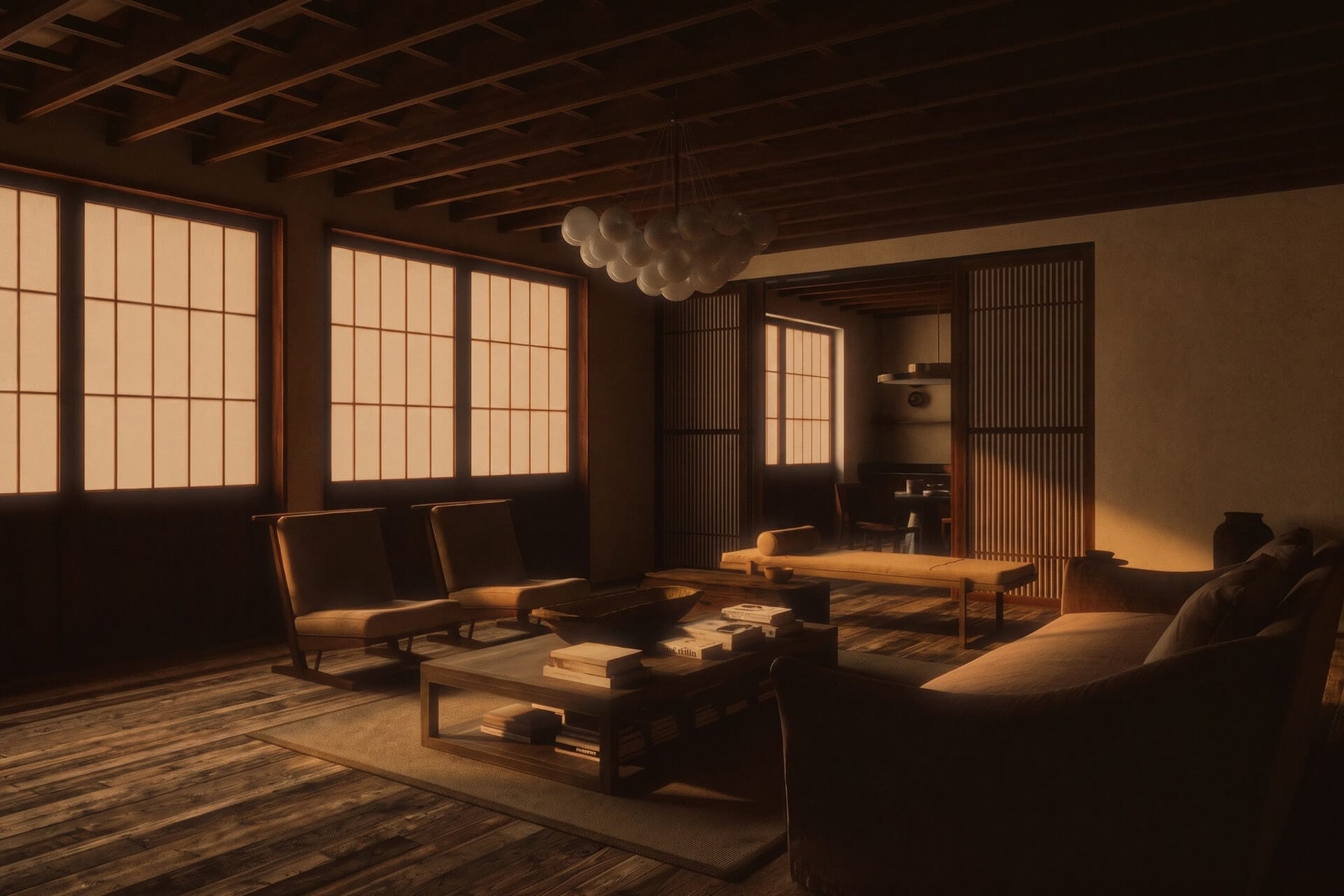
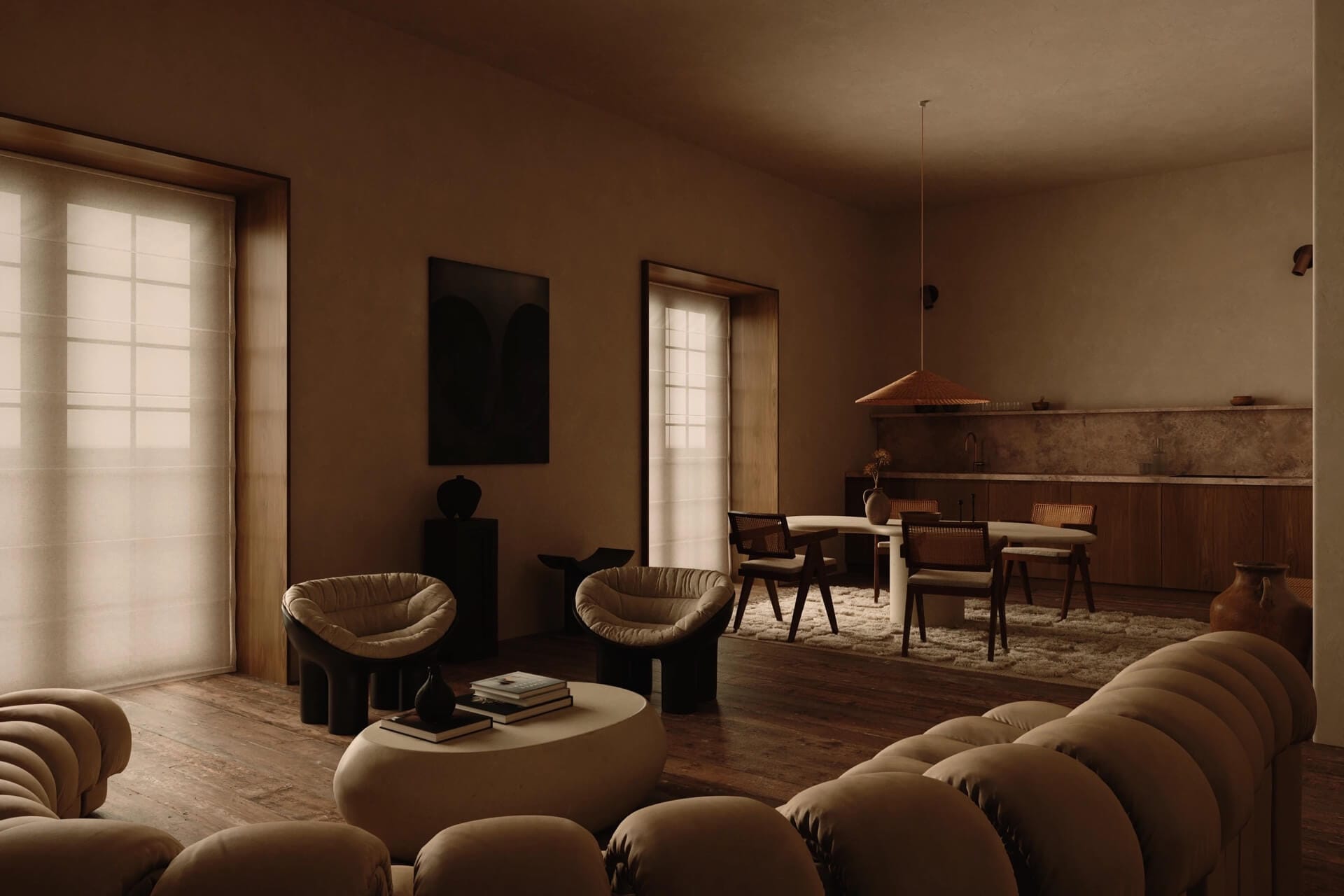
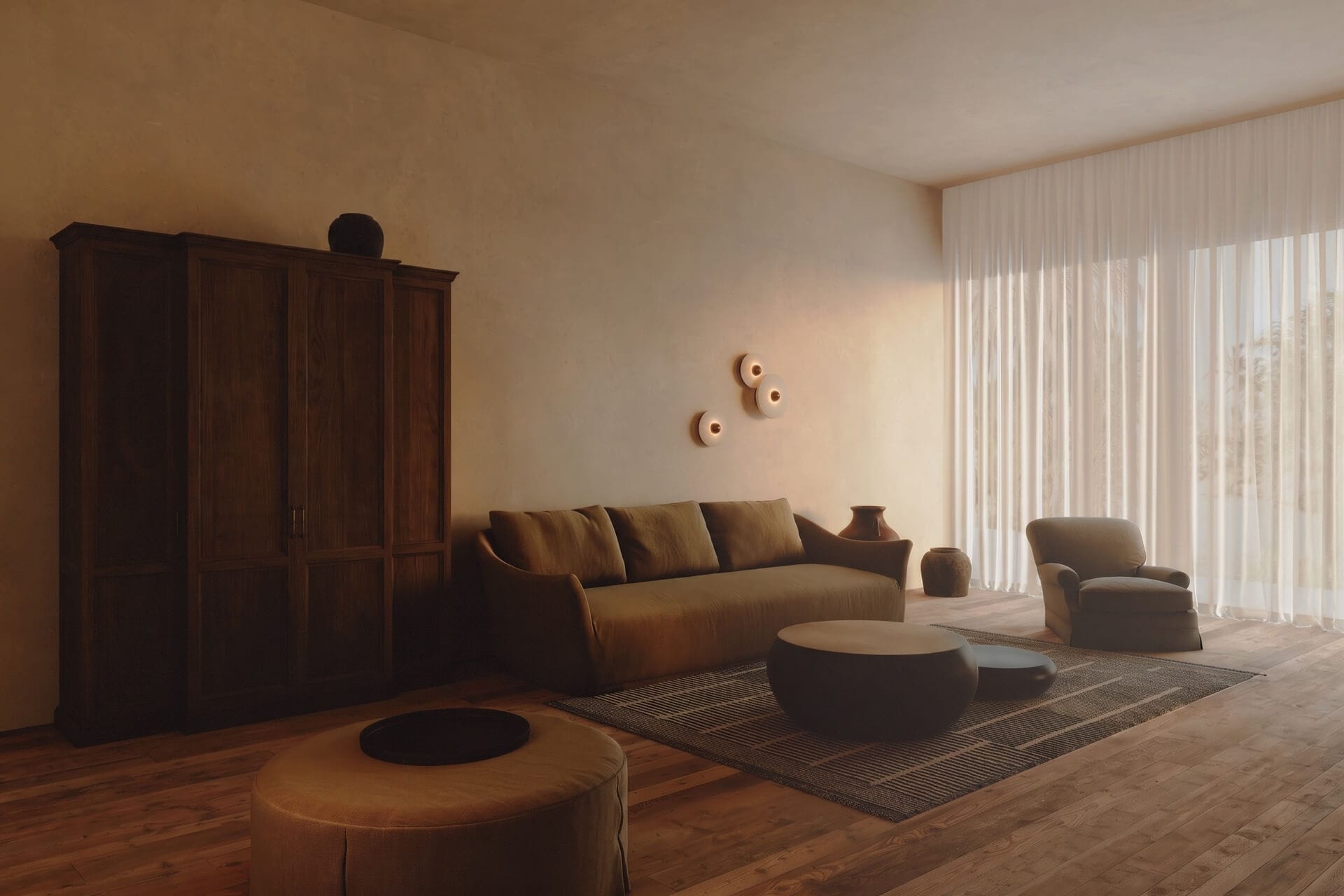
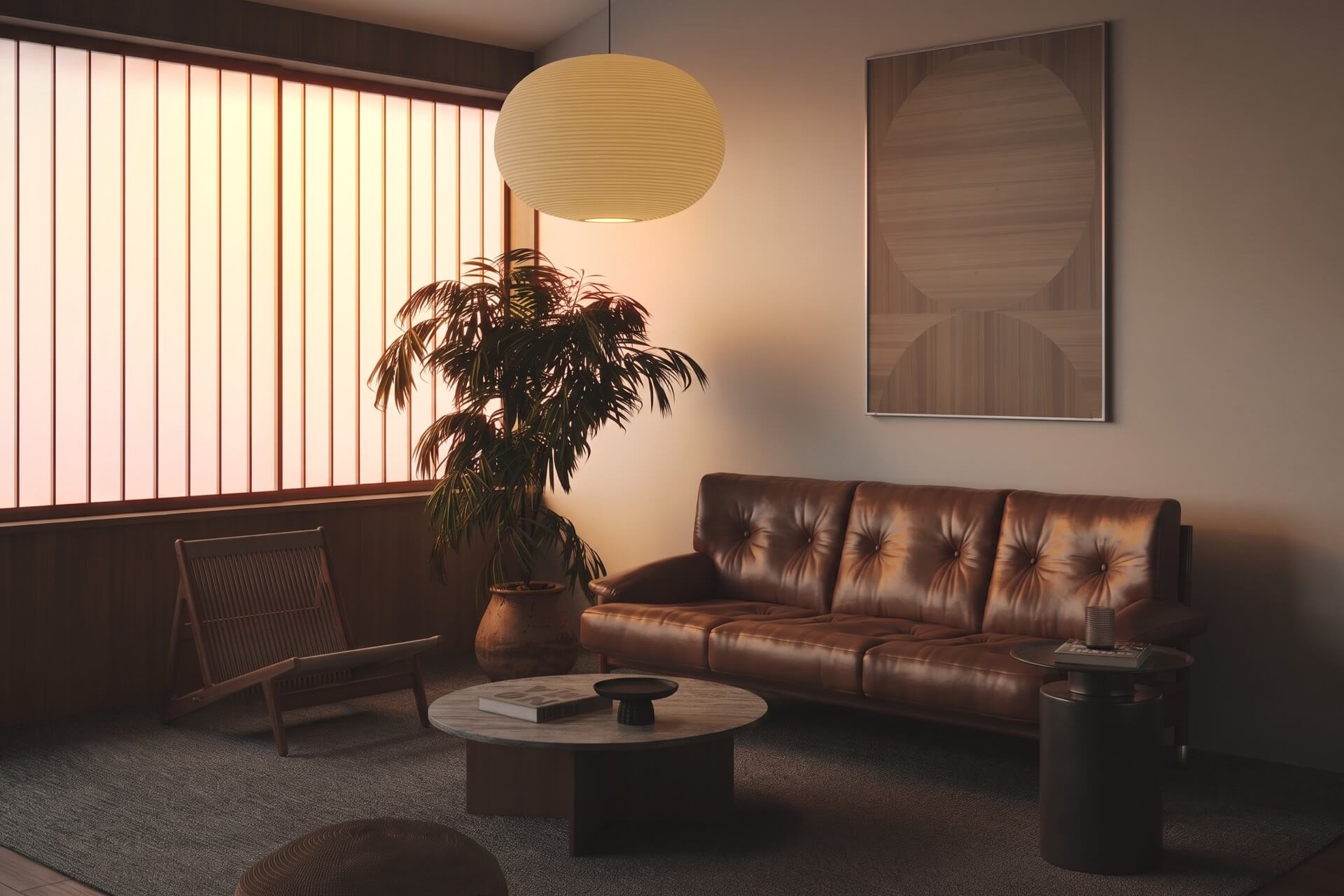
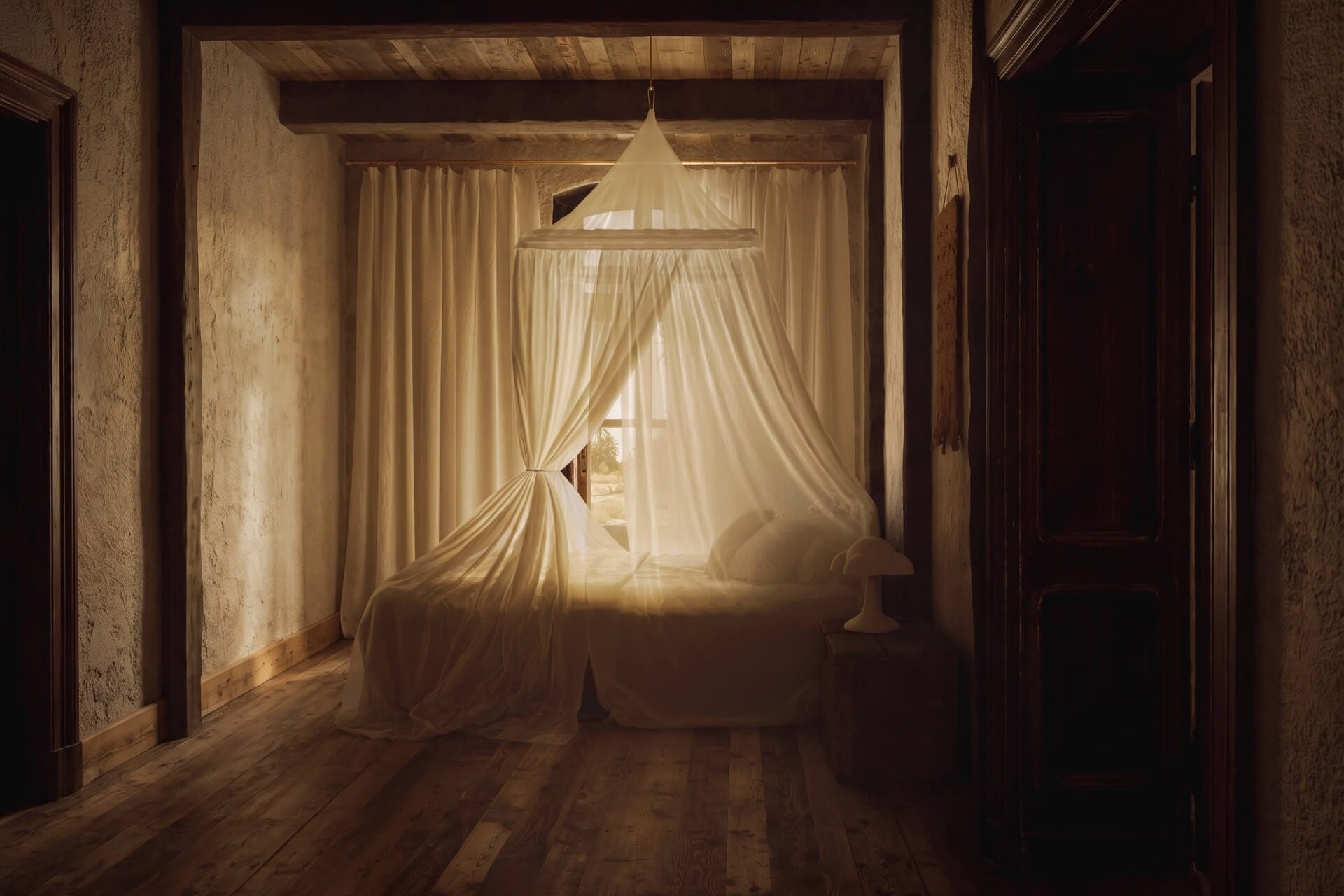
Low sun through a sheer curtain does something no lamp can reproduce. The light arrives almost horizontally, catches the weave of the fabric, and turns the curtain itself into the light source — a soft rectangle of glow with the room falling away into shadow behind it.
It lasts about forty minutes. Then the sun climbs, the angle steepens, and the room becomes ordinary again.
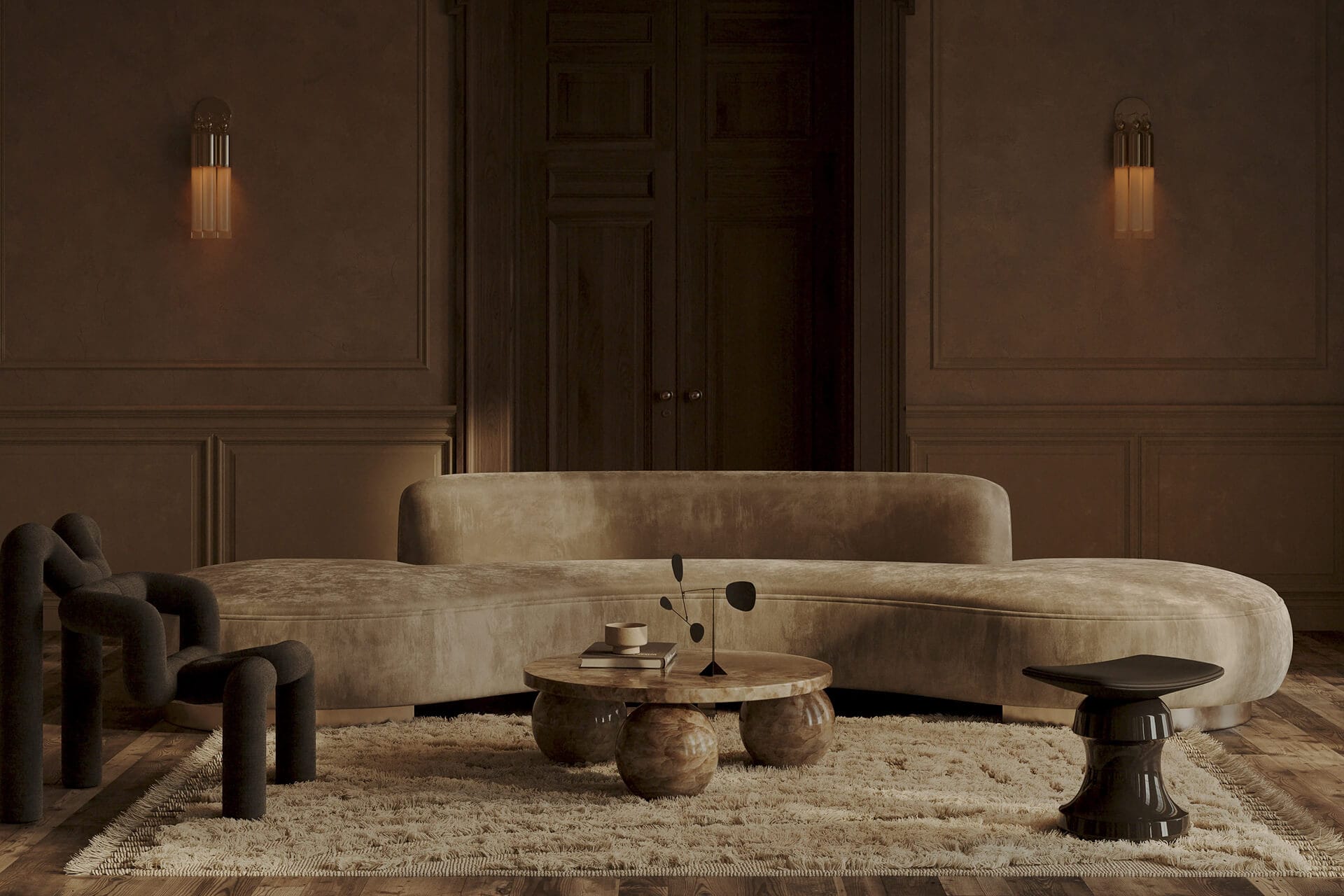
We think about those forty minutes more than we probably should. A bedroom that is beautiful at eight in the morning and unremarkable at two in the afternoon is not a failure; most people are not in their bedroom at two in the afternoon. Designing for the hours a room is actually occupied is a more honest brief than designing for a permanent, sourceless, magazine daylight that exists nowhere.
It has consequences. It means orientation matters more than plan. It means the sheer matters more than the blind. It means a room can be allowed to be dark for most of the day, so long as it is extraordinary for the part of the day you are in it. Not every room needs to perform continuously.