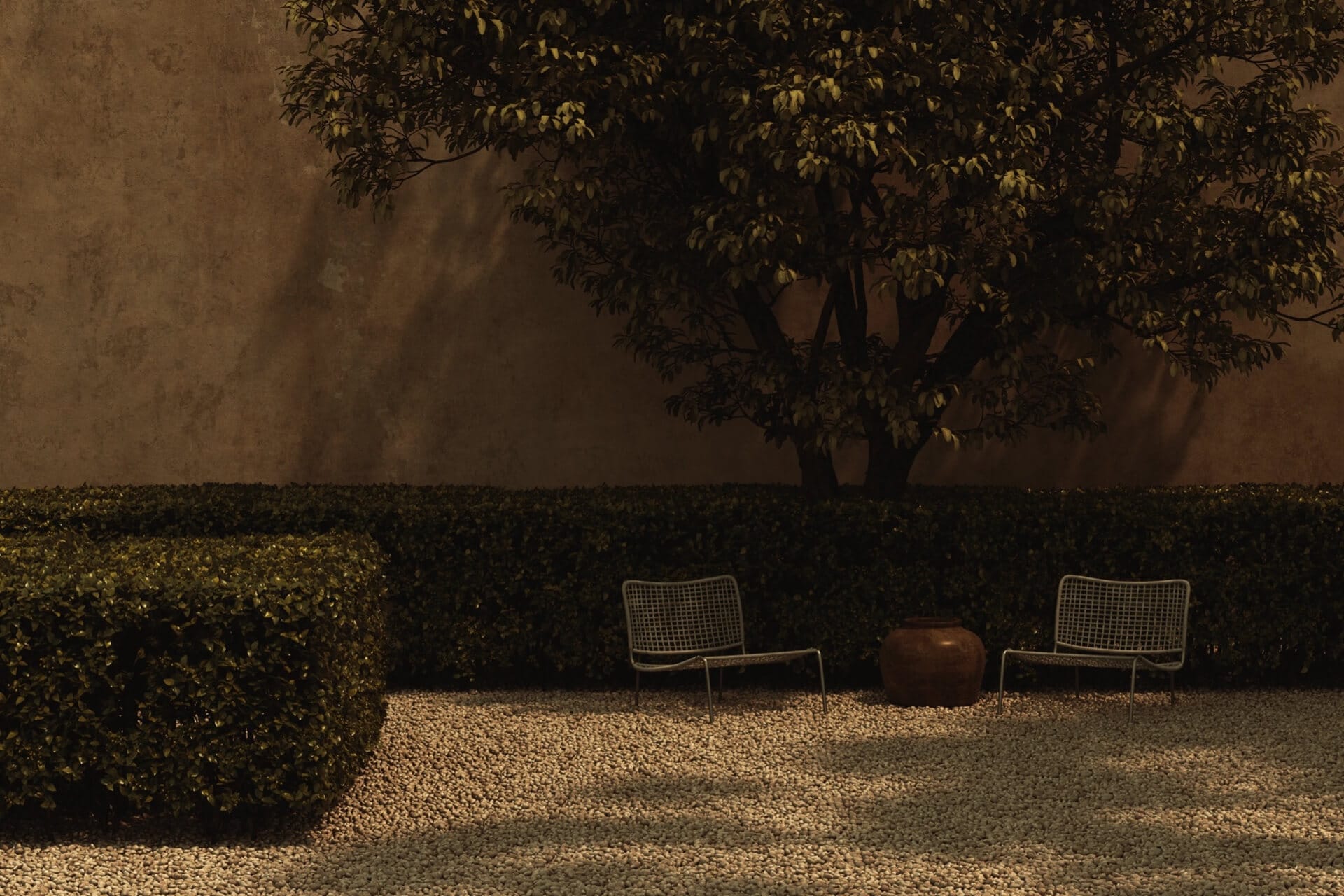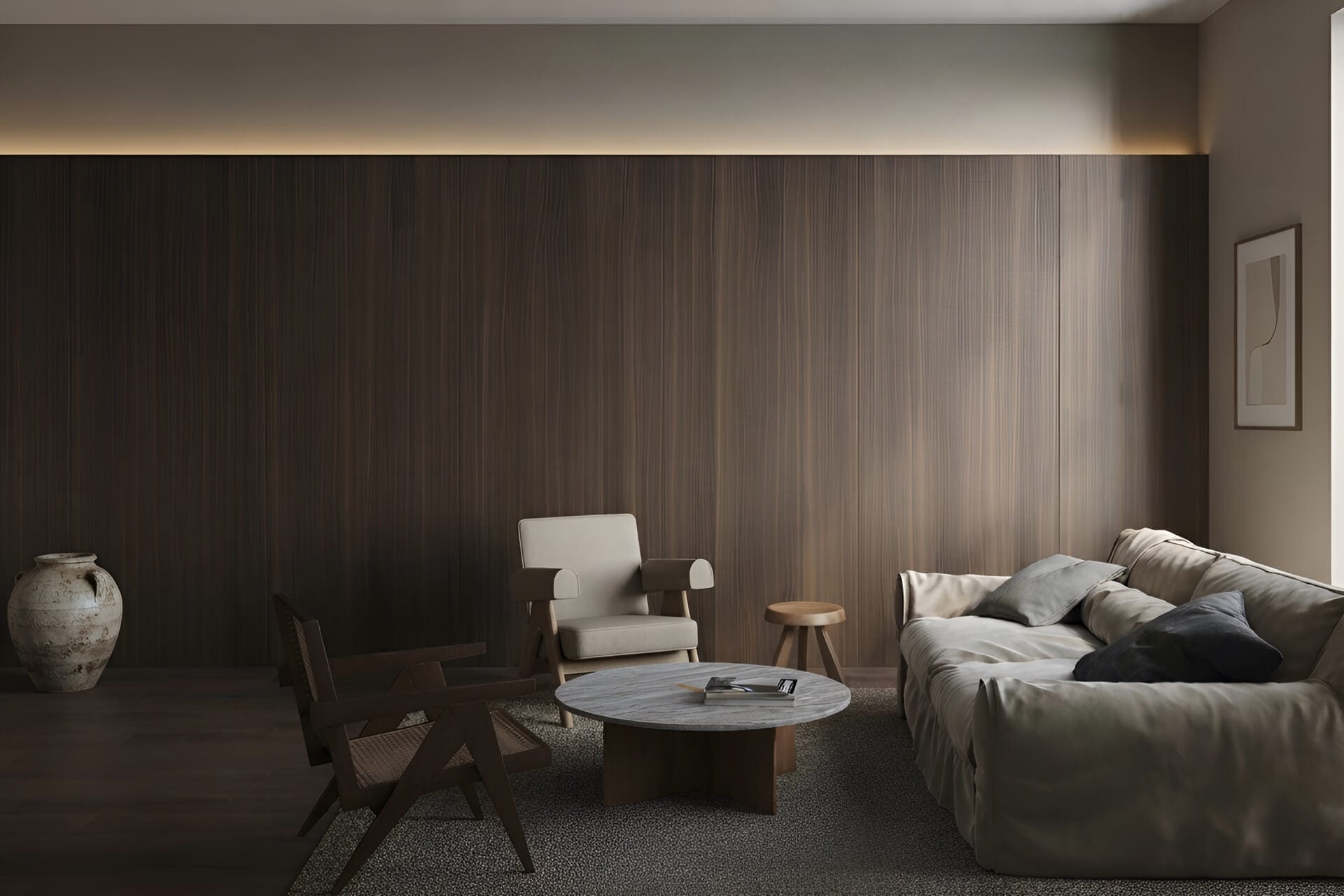

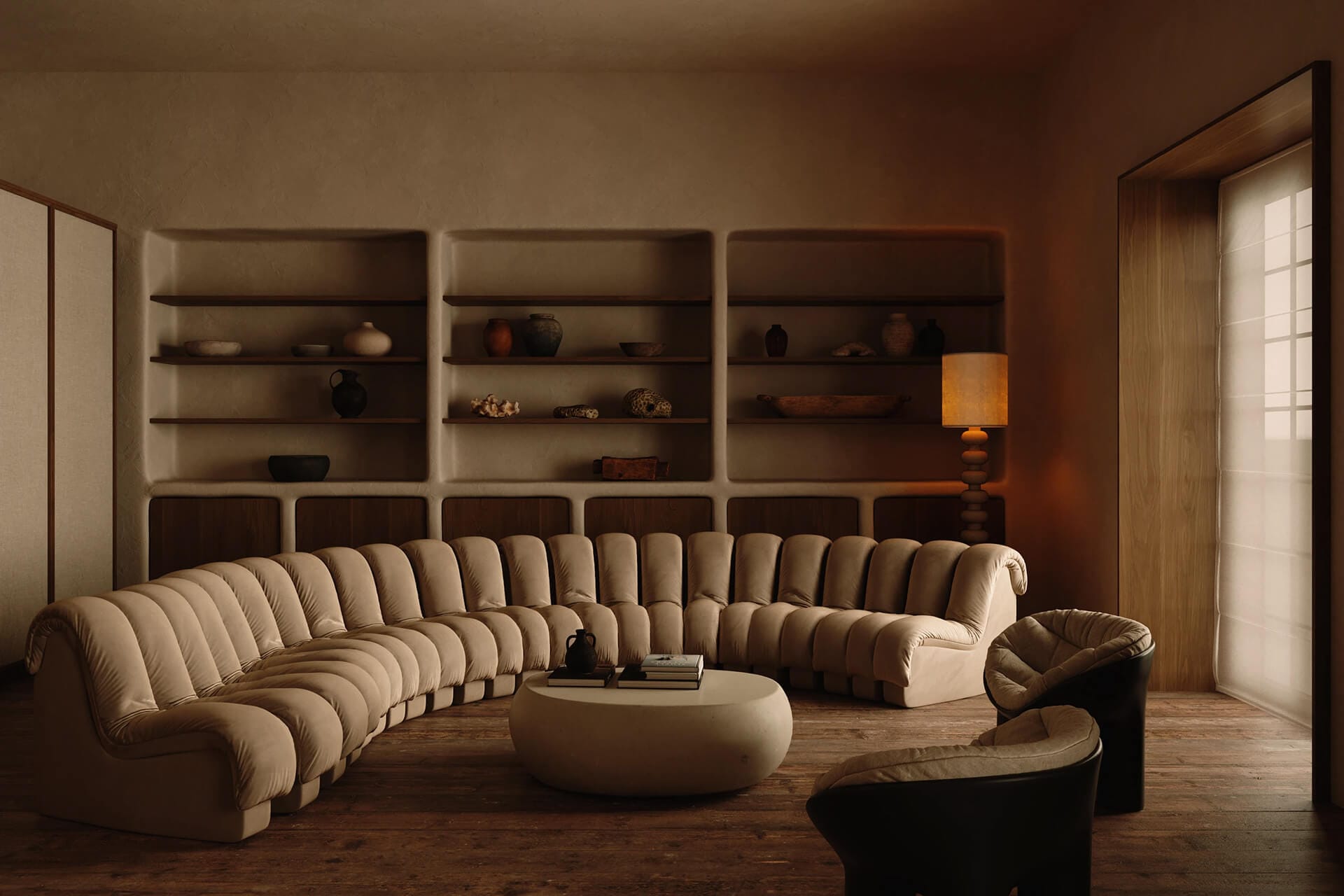
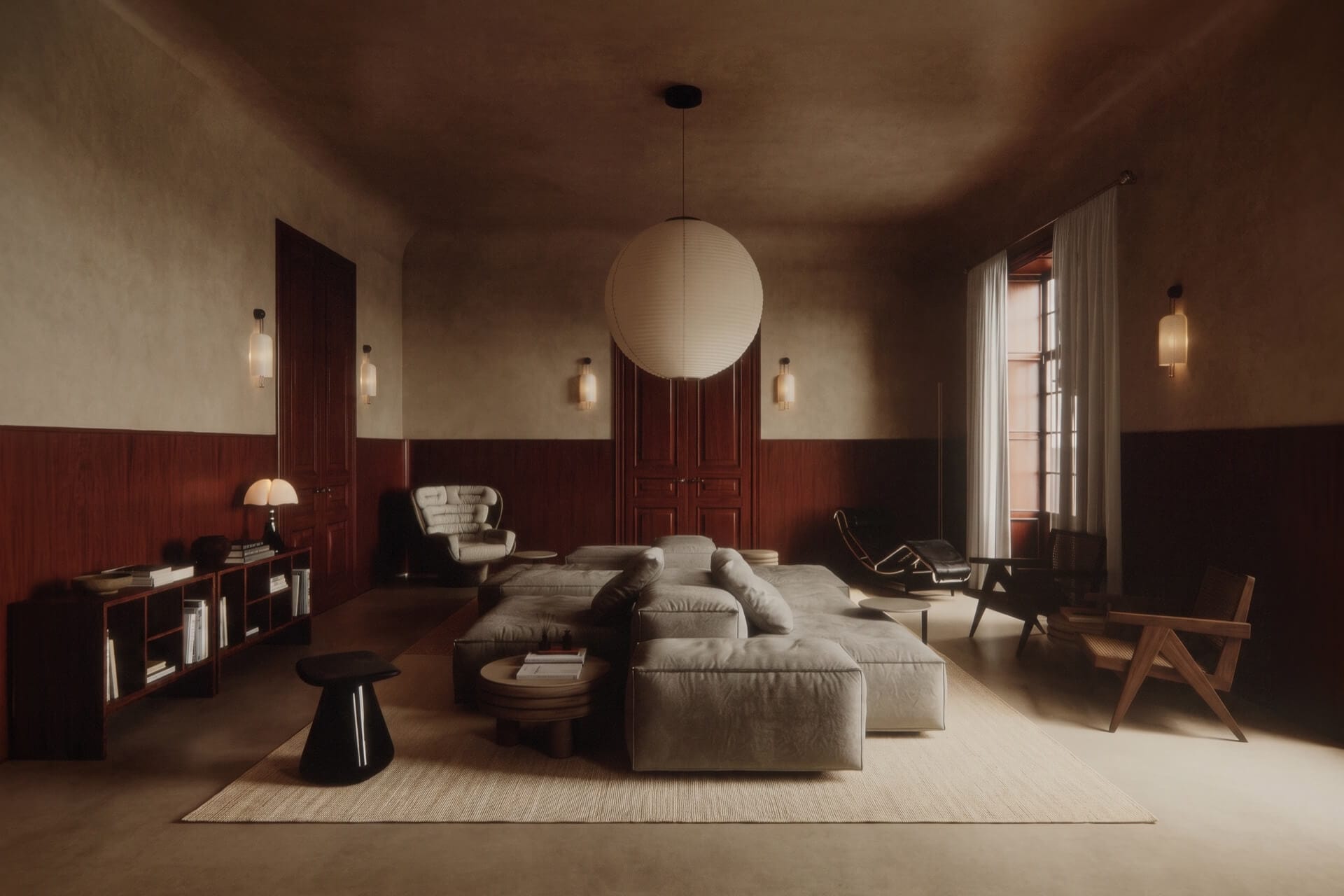
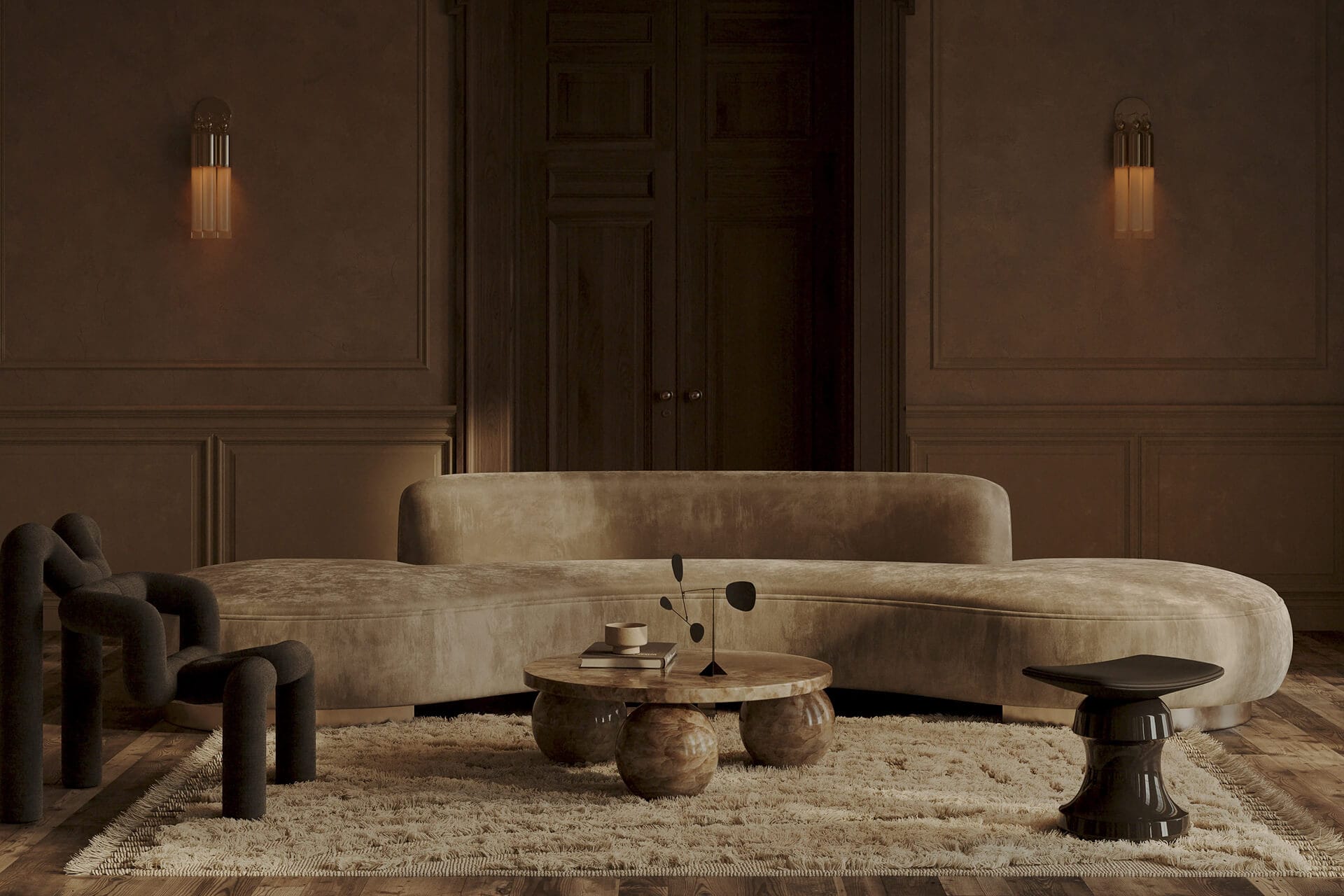
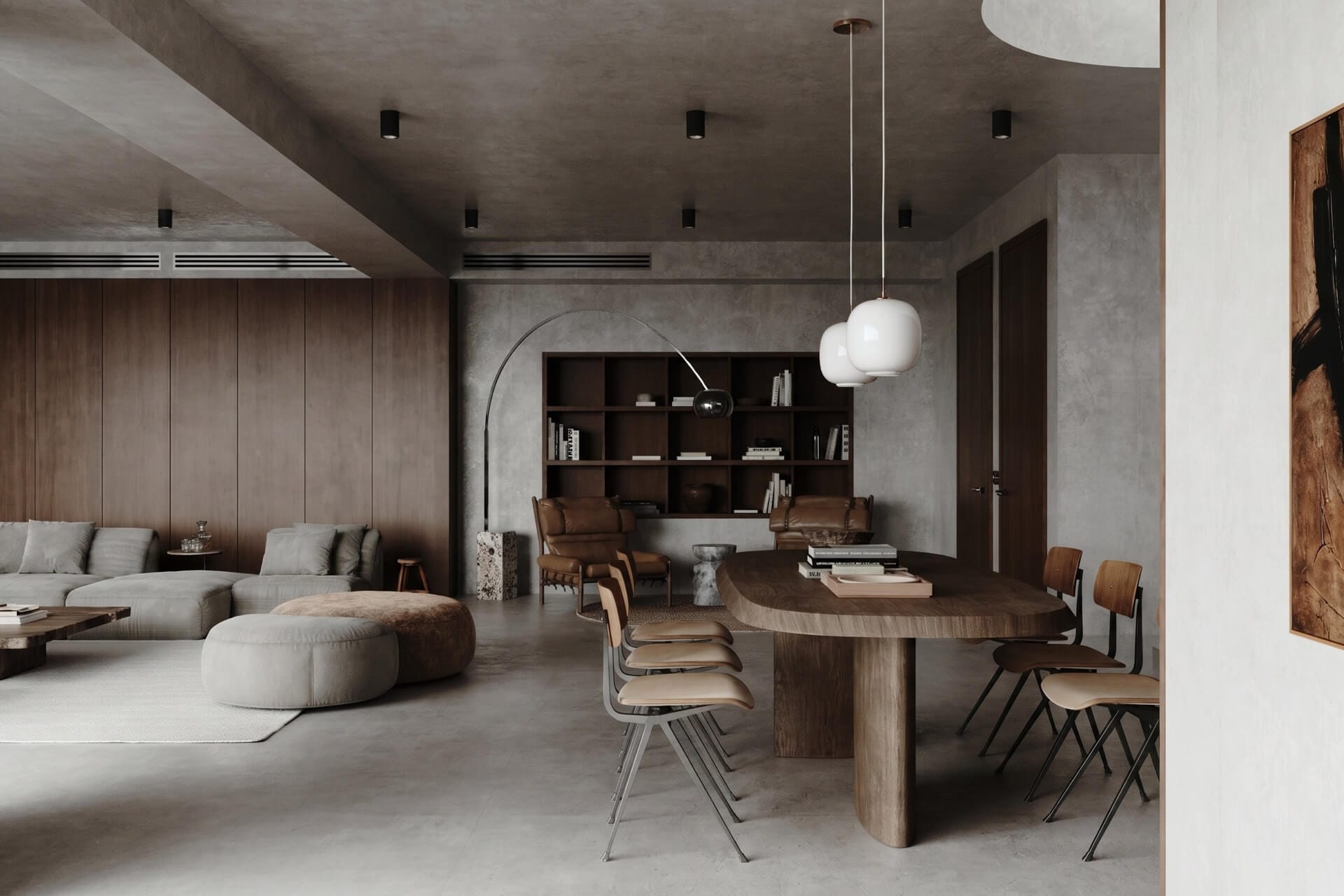
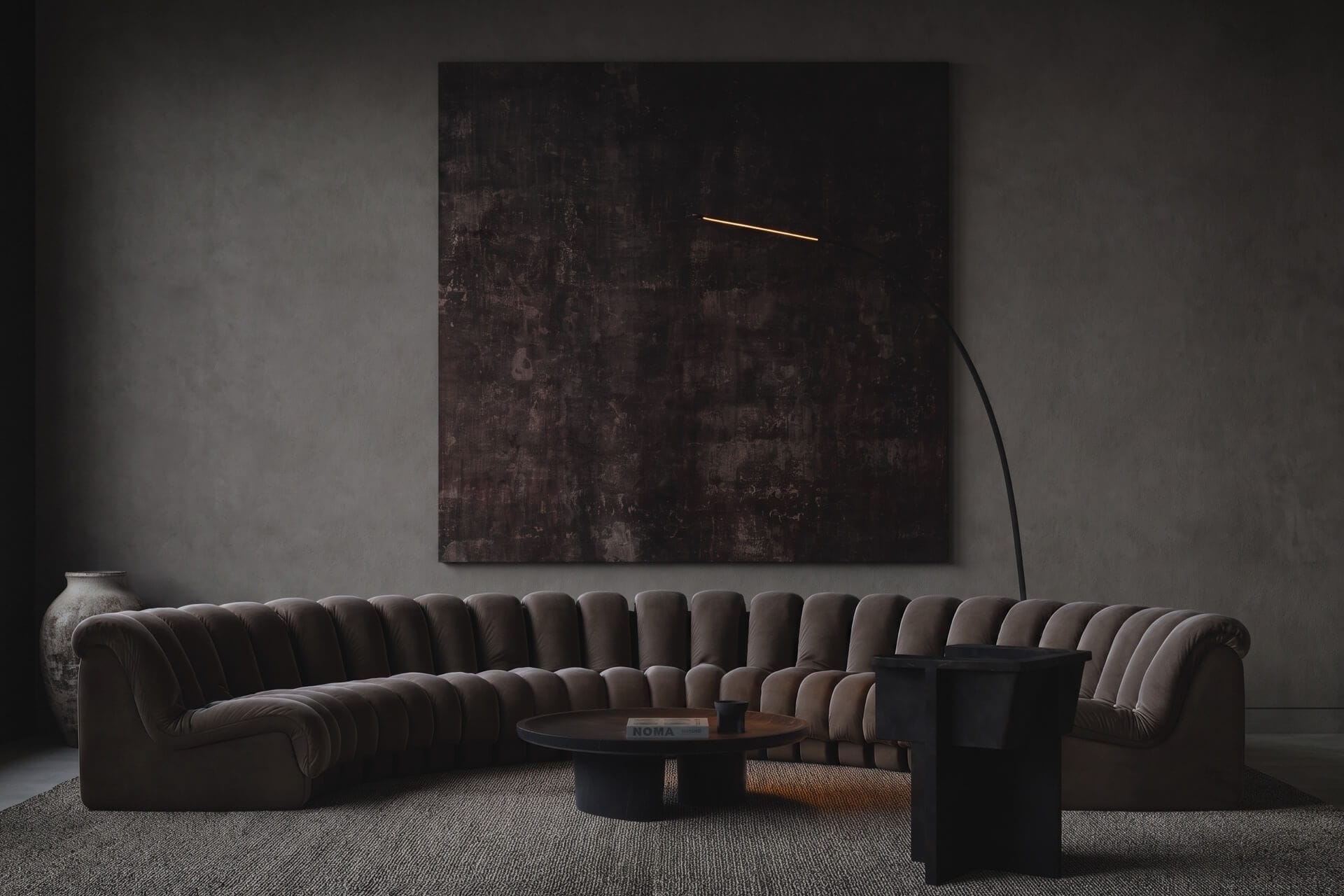
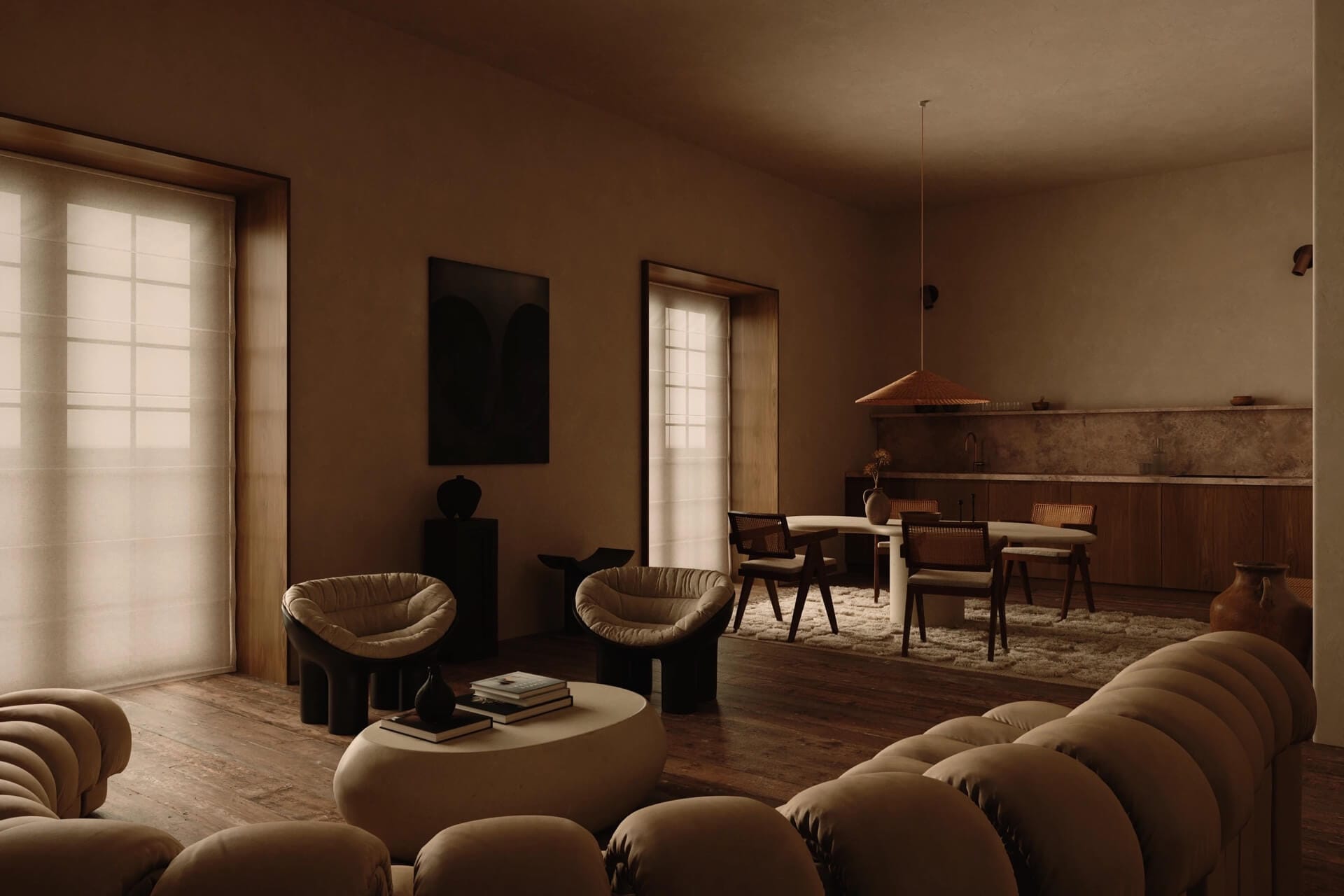
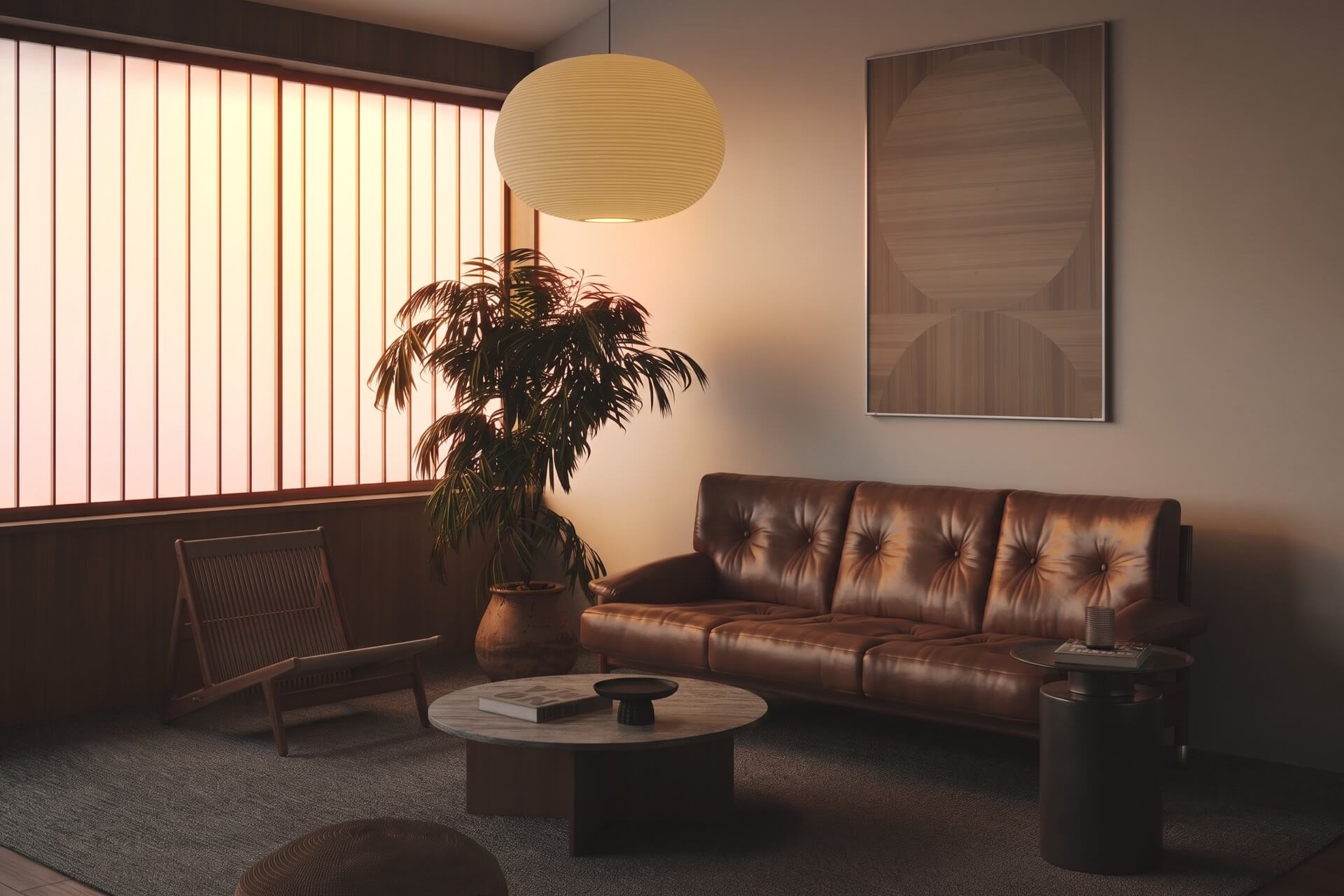
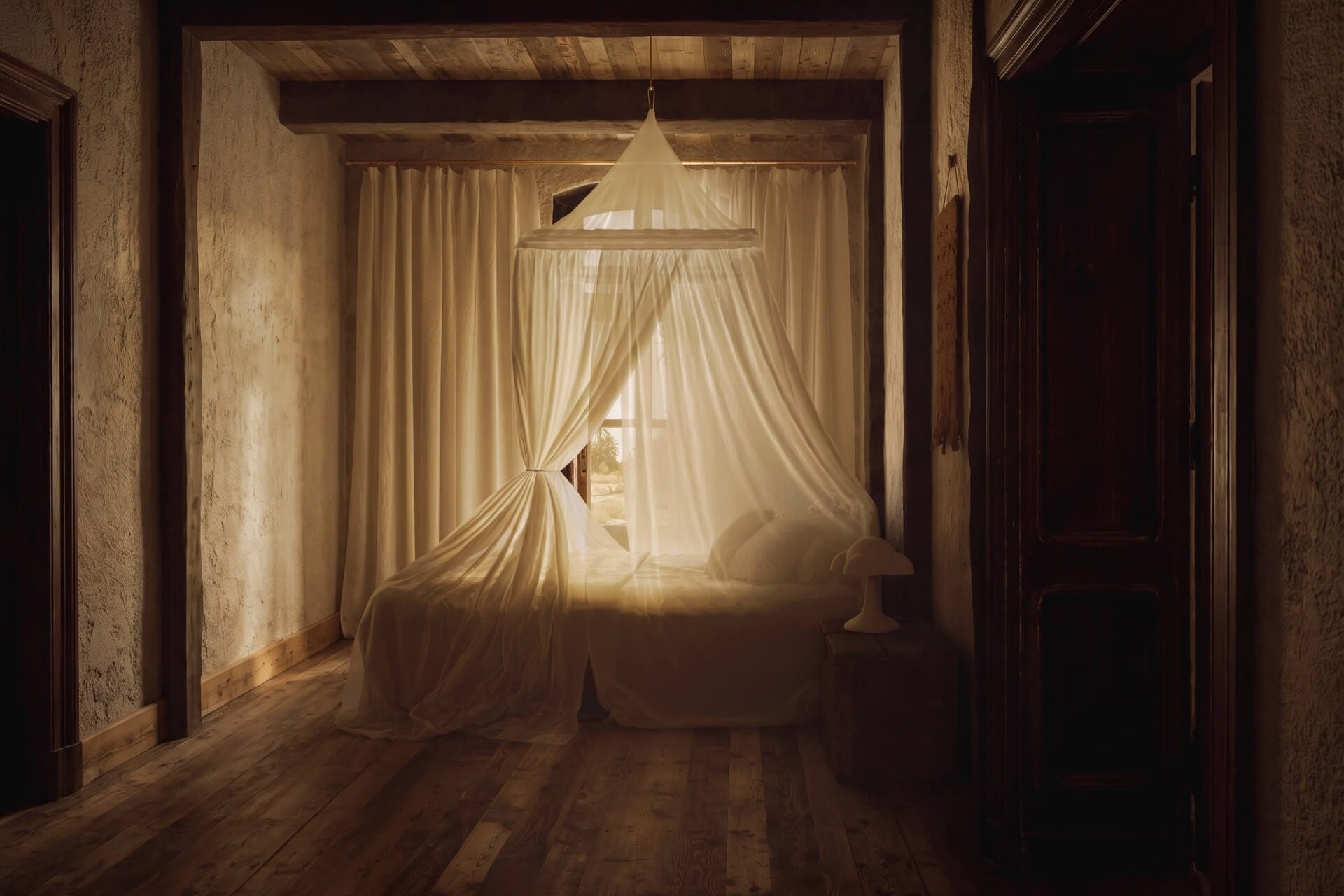

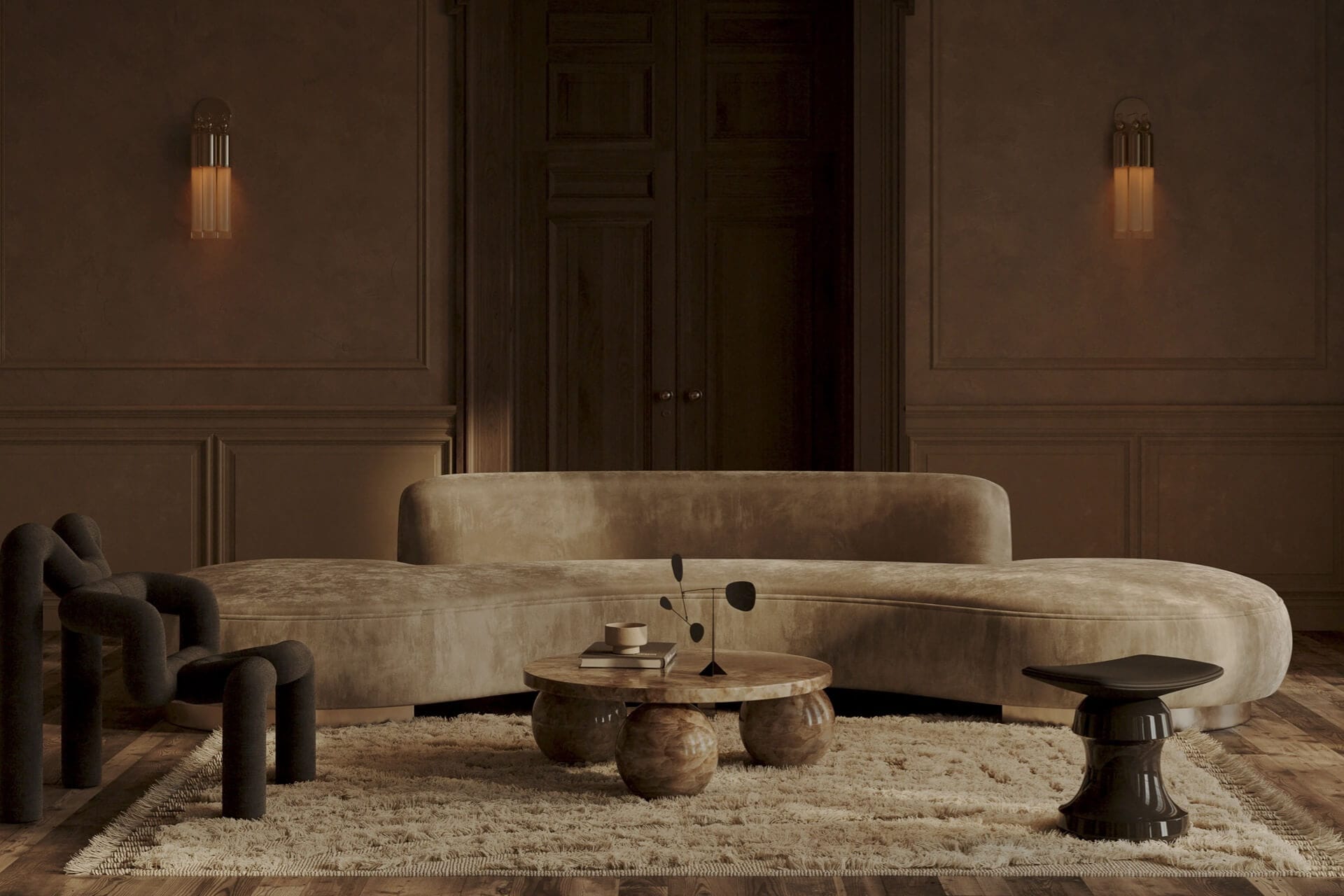
There is a kind of room — deep velvet, dark polished floor, one heavy pendant, a marble table catching a single highlight — that is frankly disappointing at noon. The daylight finds nothing to do. The velvet flattens, the marble goes grey, and the whole arrangement looks like it is waiting for something.
It is. It is waiting for the sun to go down.
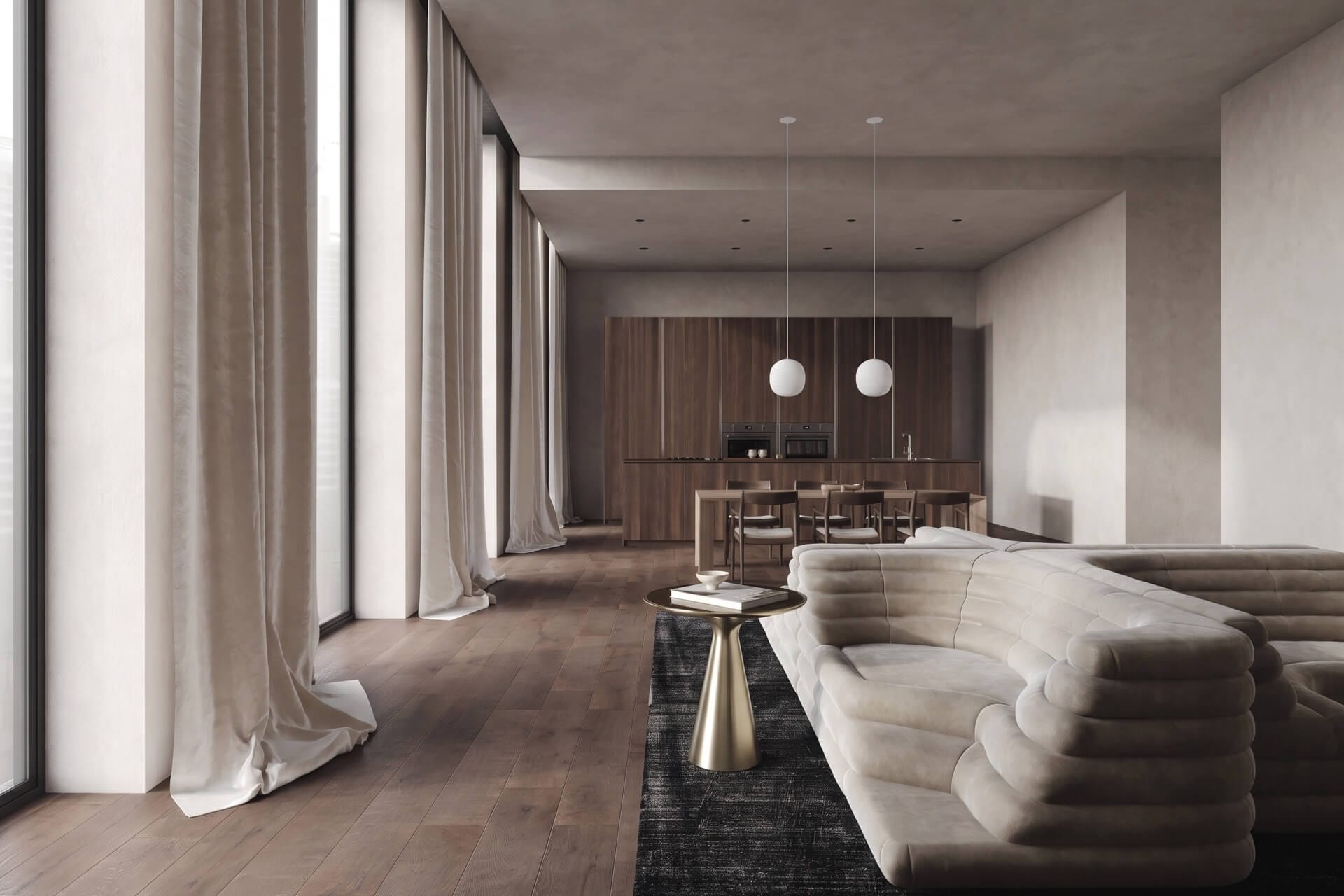
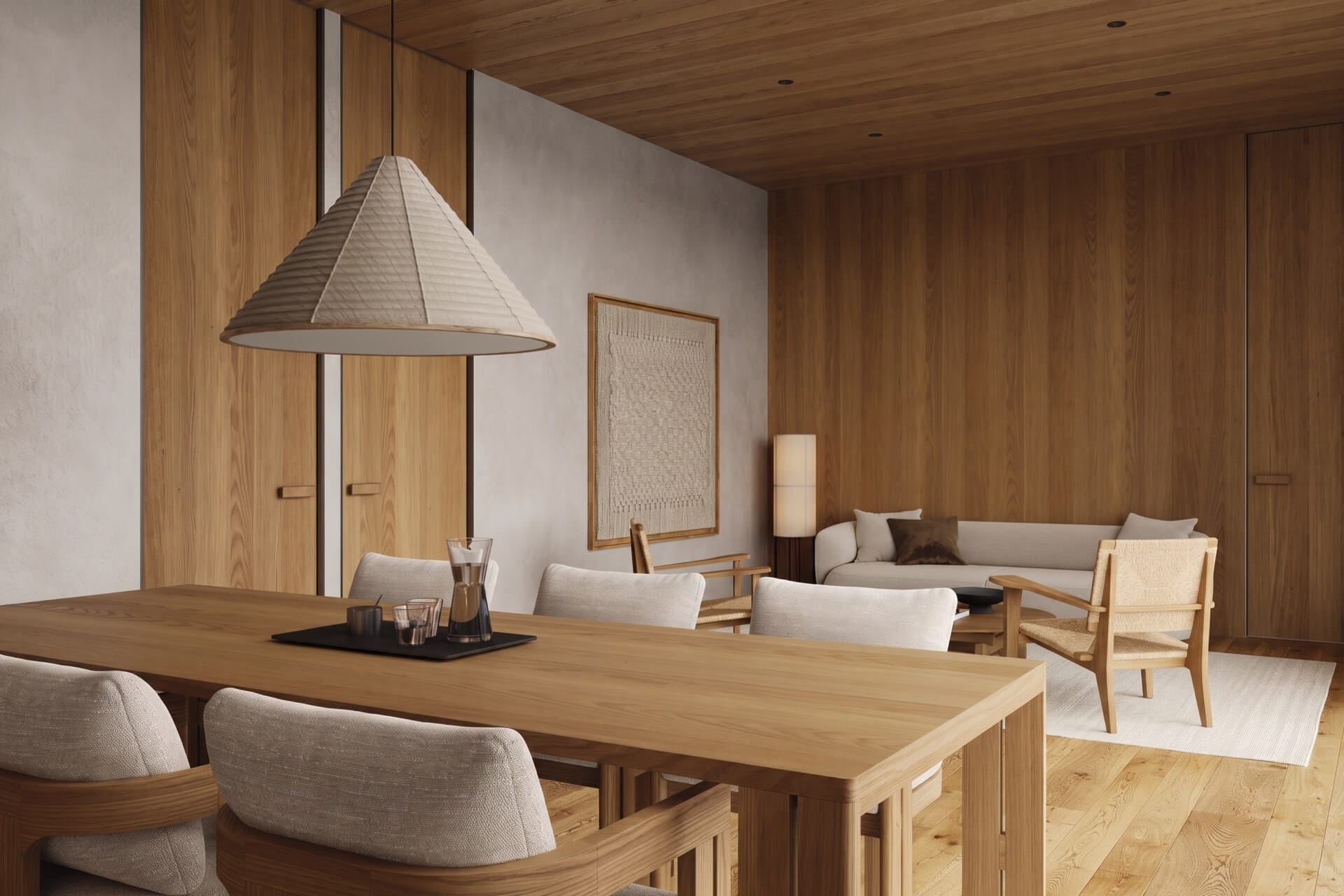
We used to treat this as a problem and try to solve it: add a lighter textile, lift the floor tone, put a window where there wasn’t one. The result was invariably a room that was adequate at every hour and remarkable at none.
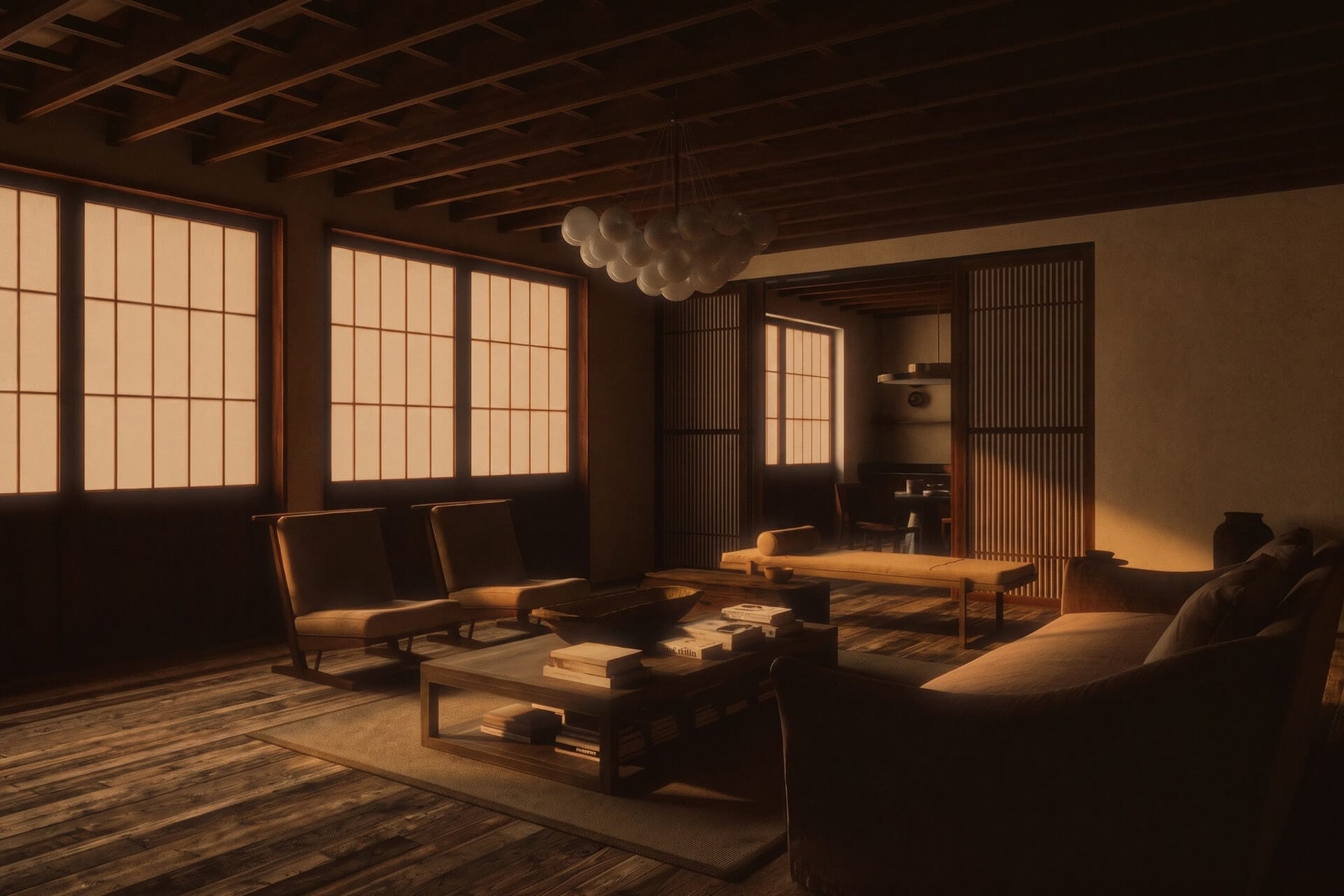
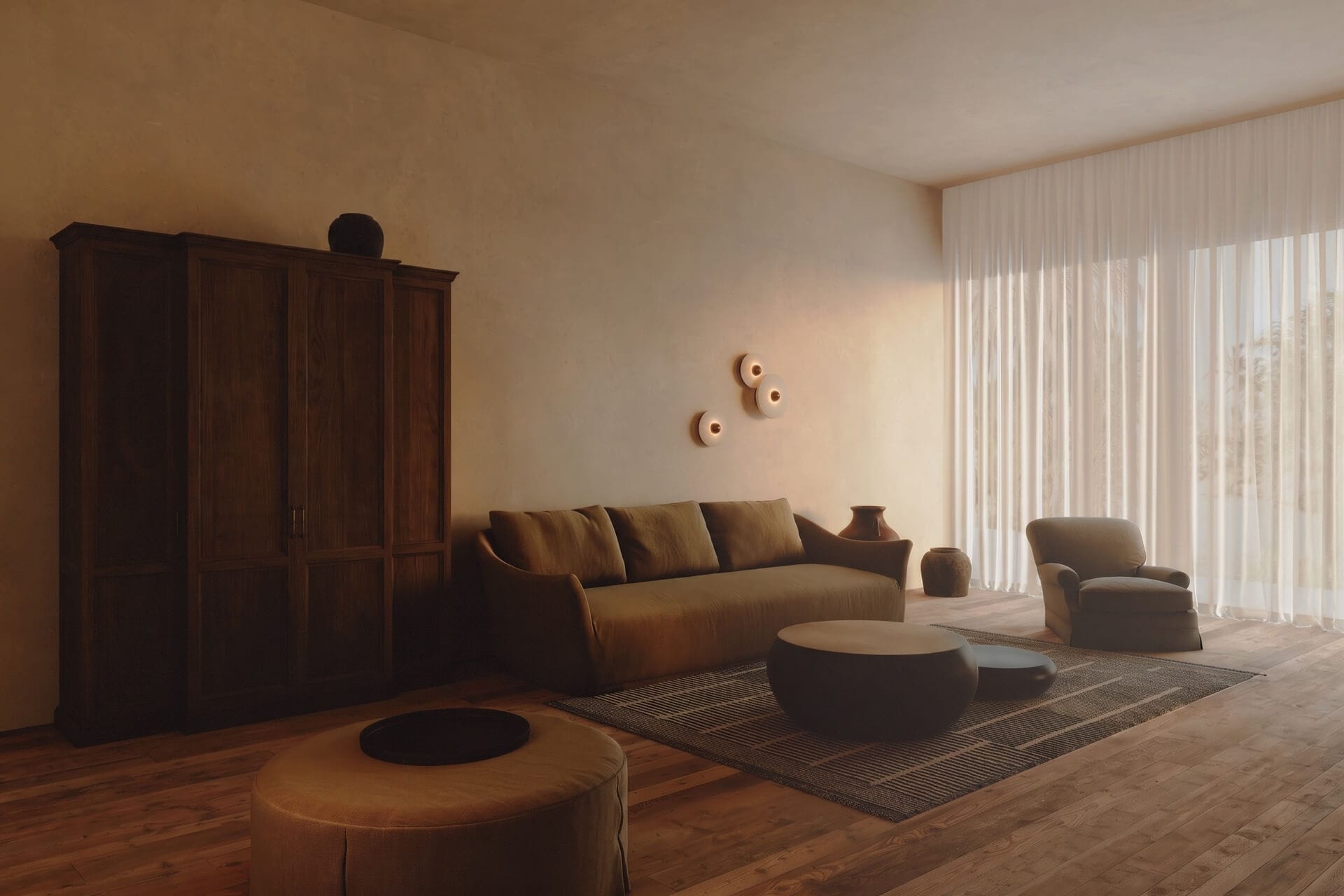
Now we let the room be what it is. A drawing room that comes alive at seven in the evening under one warm source, with everything beyond the pool of light falling away into shadow, is not underperforming for the other twelve hours — it is resting. Houses have rooms with schedules. Kitchens are morning rooms. Salons are evening rooms. Insisting every space be equally good at all times produces the architectural equivalent of a room-temperature meal.