
Put a house among pines and everyone’s first idea is camouflage — natural timber, muted greens, a form that dissolves into the treeline. It almost never works. Raw timber weathers to grey, greens go muddy against real foliage, and the house ends up looking not like part of the forest but like a shed that failed to commit.
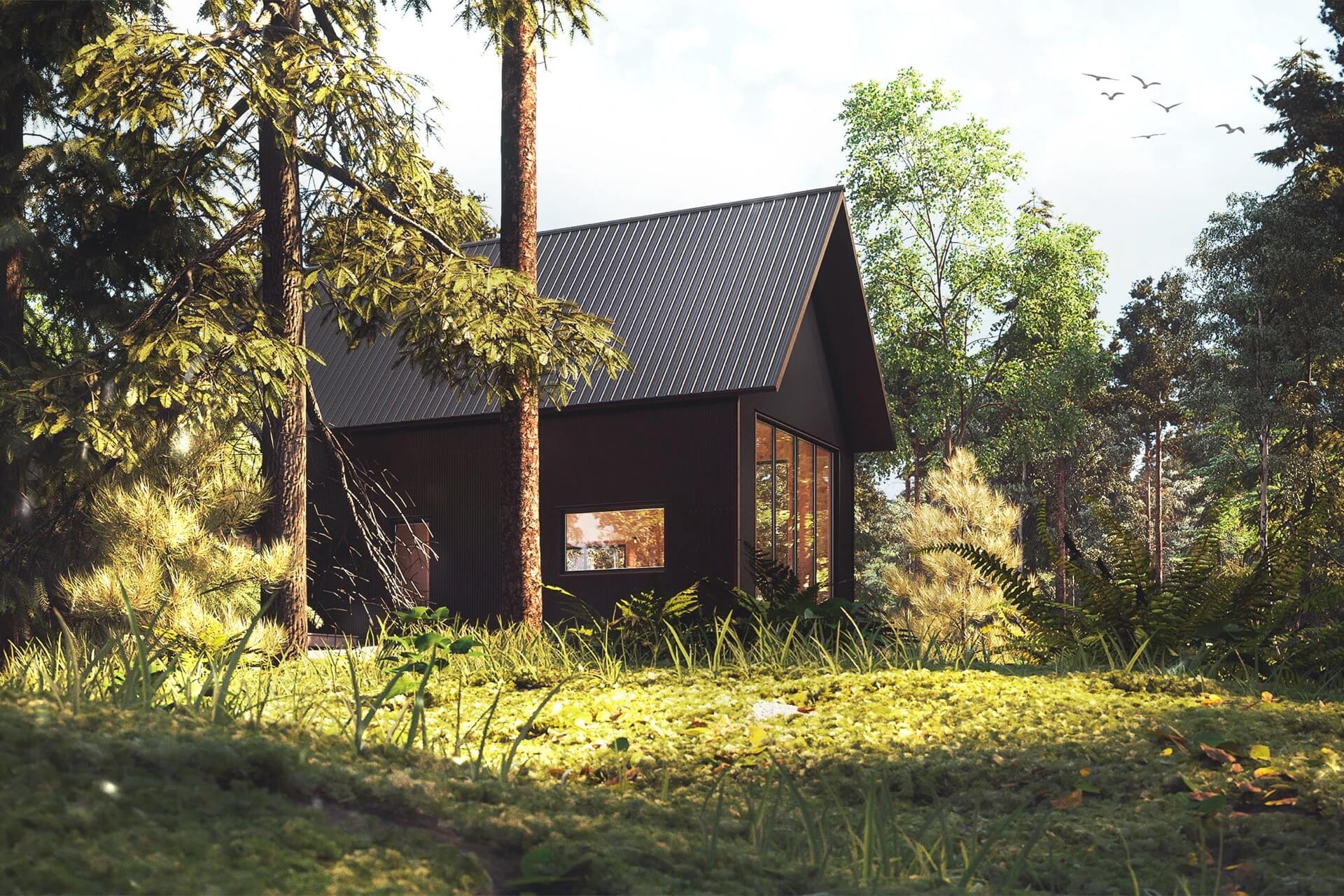
The alternative is to stop pretending. Clad the thing in black, give it a sharp gable, and let it sit in the wood as an obvious, deliberate object.
Two things happen. The house reads as architecture rather than apology. And — counterintuitively — it disappears more effectively, because black recedes in dappled shade in a way that mid-tone brown never does. In winter it is a silhouette. In summer it is a shadow between trunks.
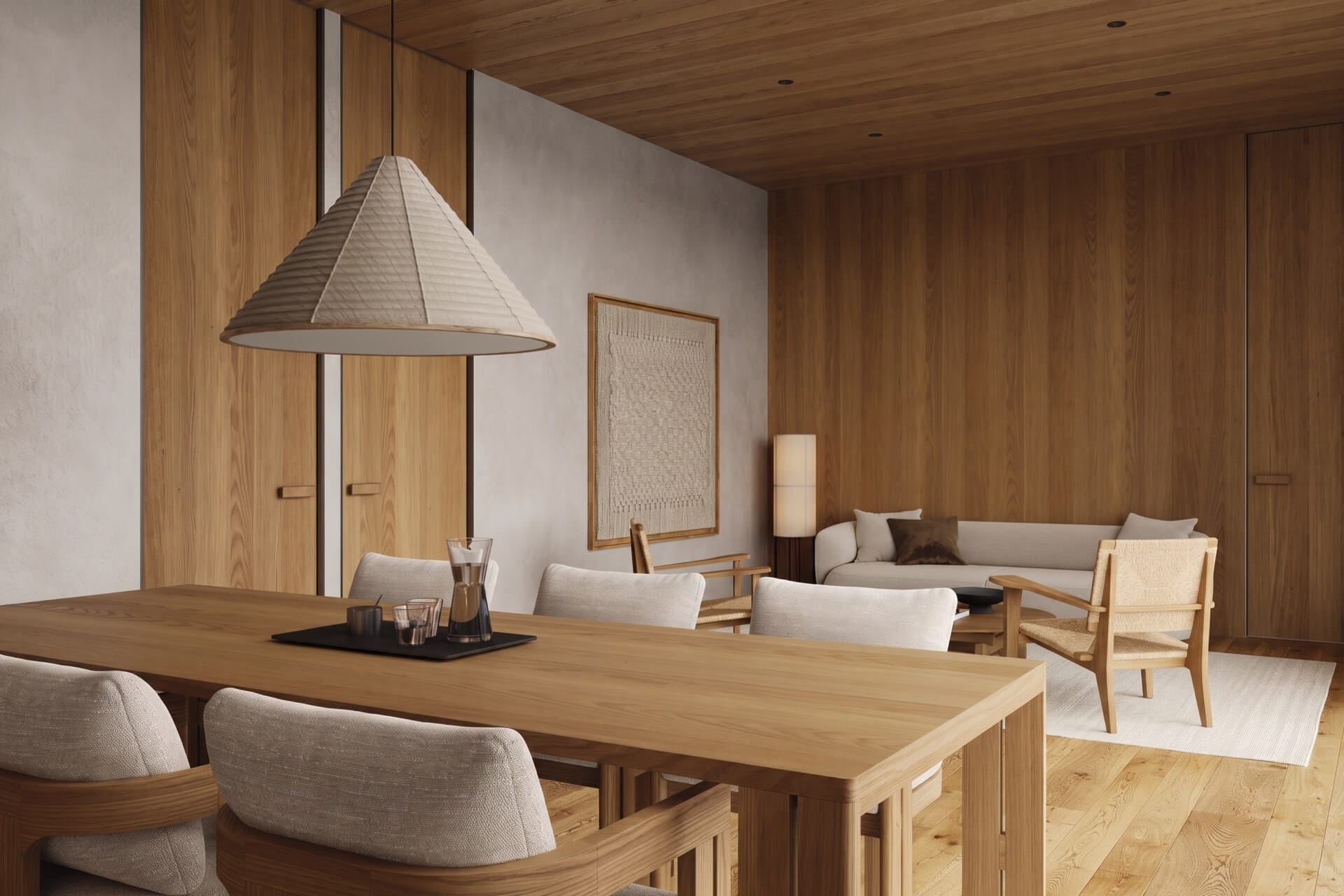
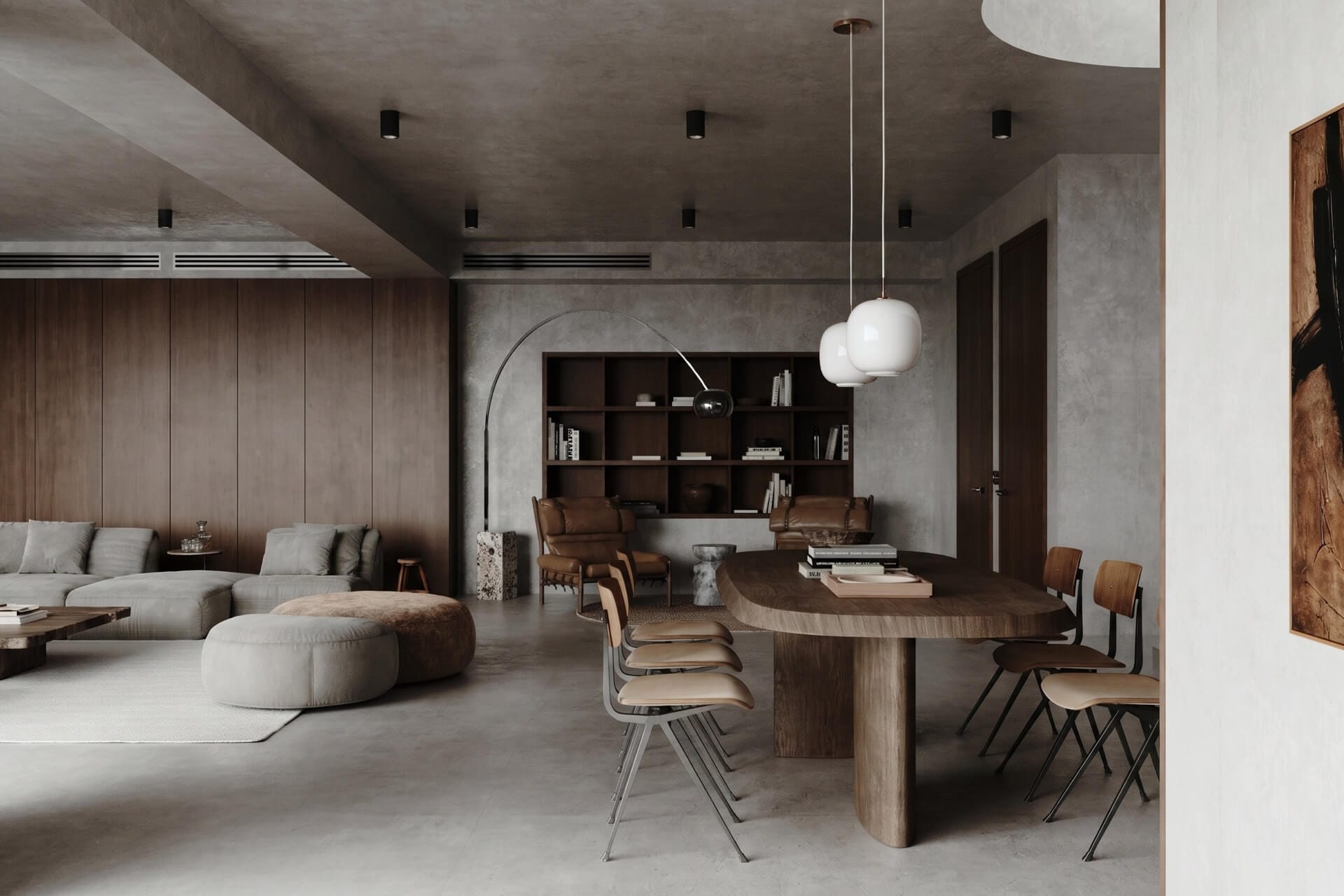
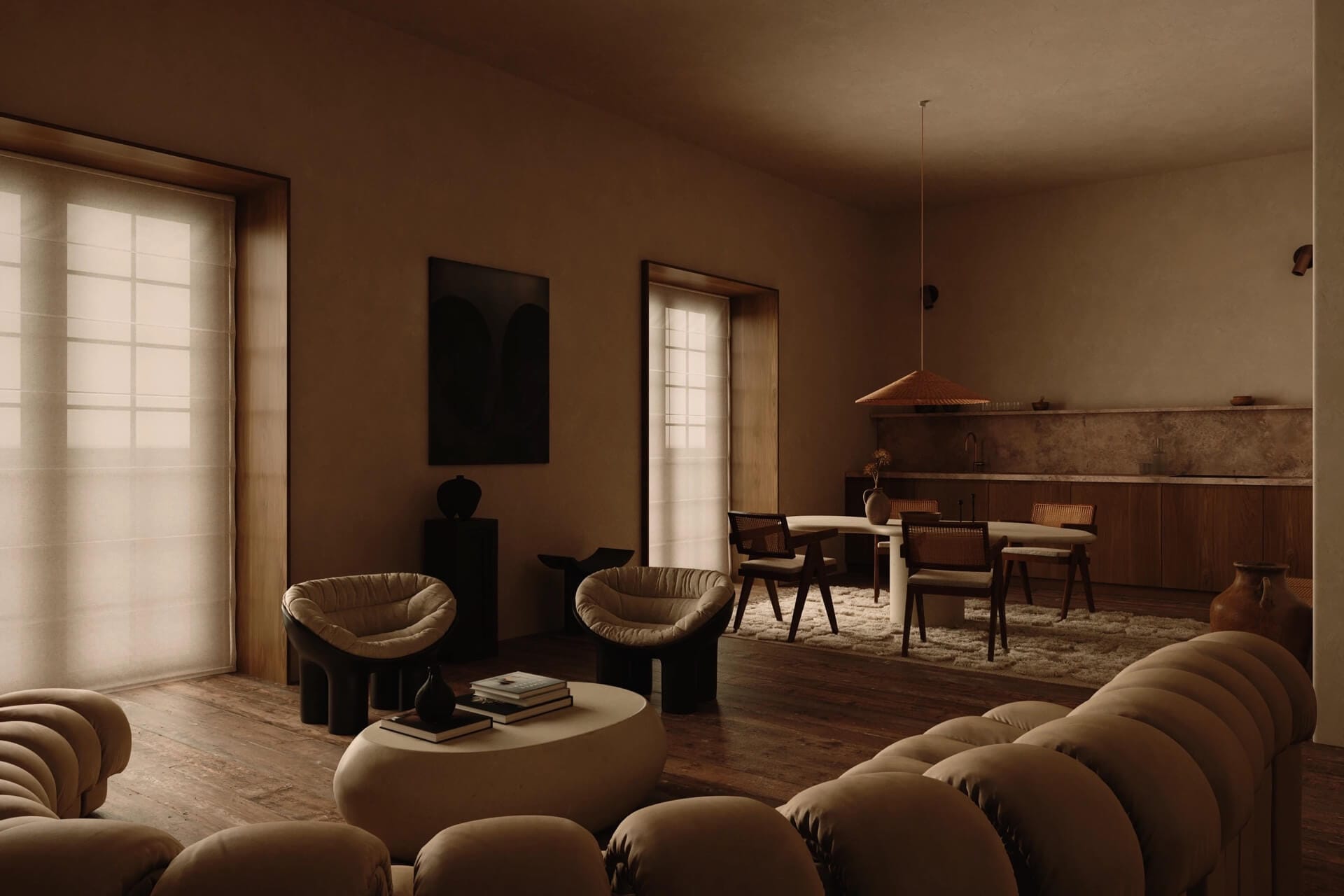
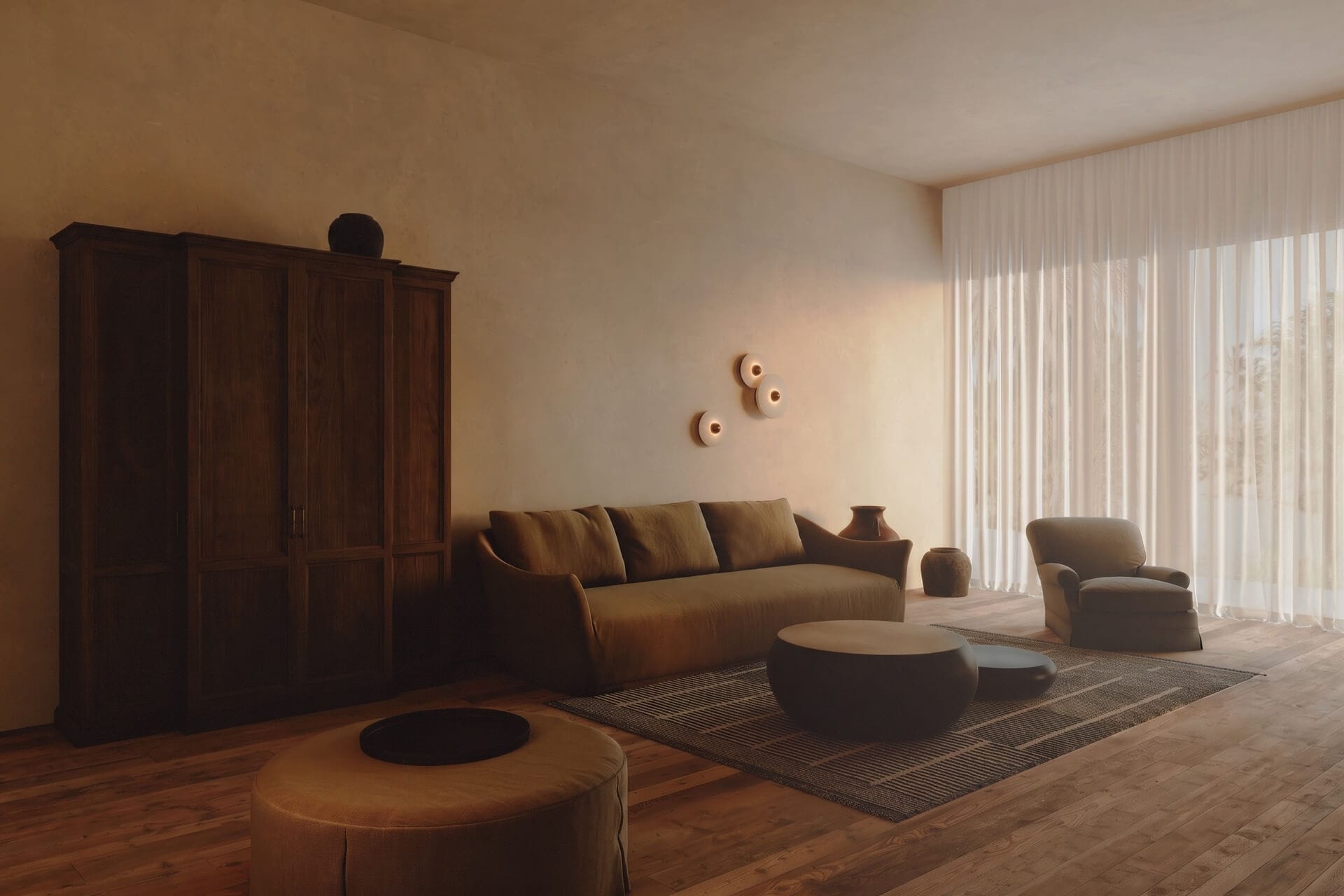
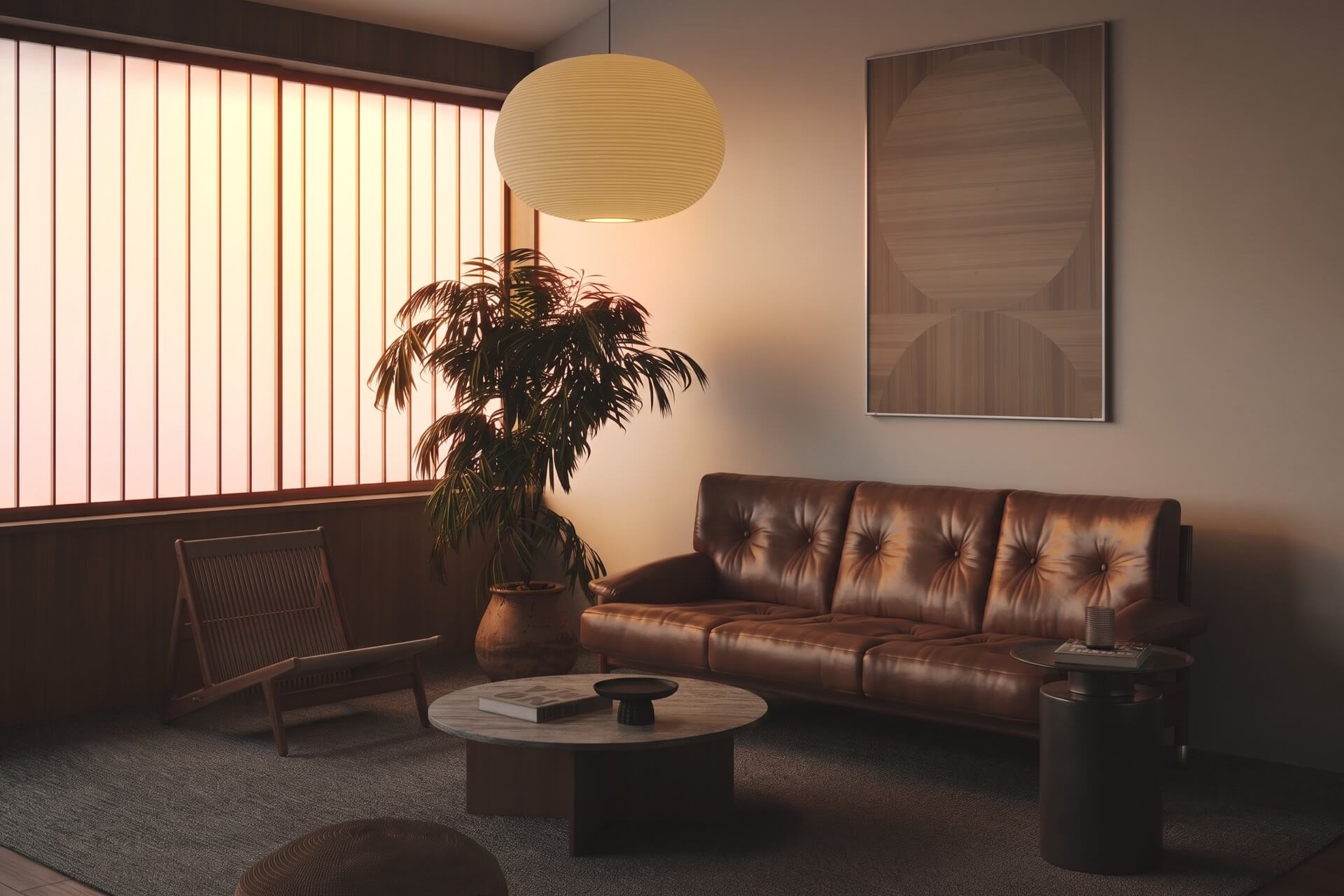
Inside, the logic inverts. Plywood, white-painted boarding, a pale concrete floor: the interior is as light as the exterior is dark, and every window becomes a framed rectangle of green. You do not need a view of the forest from a house that is trying to look like the forest. You need it from a house that has clearly decided not to be one.